
The perfect CV length depends on your experience level, career history, industry, and the amount of relevant information you need to present.
One of the most common questions job seekers ask is:
"Should my CV be one page or two pages?"
For years, candidates have been told that a CV must fit on a single page. Others insist that two pages are perfectly acceptable.
So who's right?
The truth is that there is no universal rule.
The perfect CV length depends on your experience level, career history, industry, and the amount of relevant information you need to present.
What matters most is not the number of pages but whether every piece of information on your CV earns its place.
Let's settle the debate once and for all.
The Biggest Myth About CV Length
Many candidates believe recruiters automatically reject CVs longer than one page.
This is simply not true.
Recruiters reject CVs because they are:
Irrelevant
Poorly formatted
Difficult to read
Filled with unnecessary information
Missing important achievements
A concise two-page CV is far more effective than a crowded one-page CV that omits valuable accomplishments.
Likewise, a focused one-page CV is far more effective than a bloated two-page document filled with fluff.
The goal isn't to make your CV shorter.
The goal is to make it stronger.
Why Recruiters Care More About Relevance Than Length
Recruiters spend very little time on an initial CV review.
Some studies suggest they spend only a few seconds during the first scan.
During that scan, recruiters are asking:
Does this candidate meet the requirements?
Does this experience look relevant?
Are there measurable achievements?
Is this person worth interviewing?
Notice that none of those questions involve counting pages.
Recruiters care about finding evidence of value quickly.
A well-structured two-page CV can often answer those questions better than a compressed one-page version.
When a One-Page CV Is Best
A one-page CV works best when your experience is limited or highly focused.
Generally, a one-page CV is ideal for:
Students
If you're still in school or recently graduated, you likely don't have enough relevant experience to justify two pages.
Focus on:
Education
Projects
Internships
Certifications
Skills
Volunteer work
Entry-Level Professionals
Candidates with less than three years of experience can often fit their most relevant information on a single page.
Career Changers With Limited Relevant Experience
If you're transitioning into a new field, you may only need to showcase experiences that relate directly to your target role.
Candidates Applying for High-Volume Roles
Certain entry-level positions receive hundreds of applications. A concise one-page CV can help recruiters quickly identify your strengths.
Advantages of a One-Page CV
Easy to scan
Forces you to prioritize important information
Reduces unnecessary details
Works well for junior professionals
Encourages concise writing
When a Two-Page CV Is Best
For many professionals, two pages are not only acceptable—they're recommended.
A two-page CV is ideal for:
Mid-Level Professionals
If you have five or more years of relevant experience, limiting yourself to one page may force you to remove valuable achievements.
Senior Professionals
Managers, directors, team leads, and executives often need additional space to showcase:
Leadership experience
Strategic initiatives
Team management
Budget responsibilities
Business impact
Technical Professionals
Software engineers, data analysts, cybersecurity specialists, and other technical professionals frequently need room to highlight:
Projects
Technologies
Certifications
Technical achievements
Specialists
Professionals with highly specialized expertise often require additional space to demonstrate their qualifications effectively.
Advantages of a Two-Page CV
More room for achievements
Better context for career progression
Space for technical projects
Opportunity to showcase leadership impact
Easier to present complex experience
When a CV Becomes Too Long
While two pages are generally acceptable, longer isn't always better.
The following are warning signs:
Repeating Information
If multiple positions contain nearly identical bullet points, you're wasting valuable space.
Including Irrelevant Jobs
A software developer does not need to dedicate significant space to a retail job held fifteen years ago.
Listing Every Responsibility
Recruiters care more about outcomes than duties.
Instead of:
"Responsible for managing customer requests."
Use:
"Managed over 100 customer requests weekly while maintaining a 98% satisfaction score."
Including Obsolete Skills
Old software, outdated certifications, and irrelevant skills should be removed.
Excessive Personal Information
Modern CVs do not require:
Marital status
Religion
Full home address
Age
Nationality (in most cases)
Passport photographs (unless specifically requested)
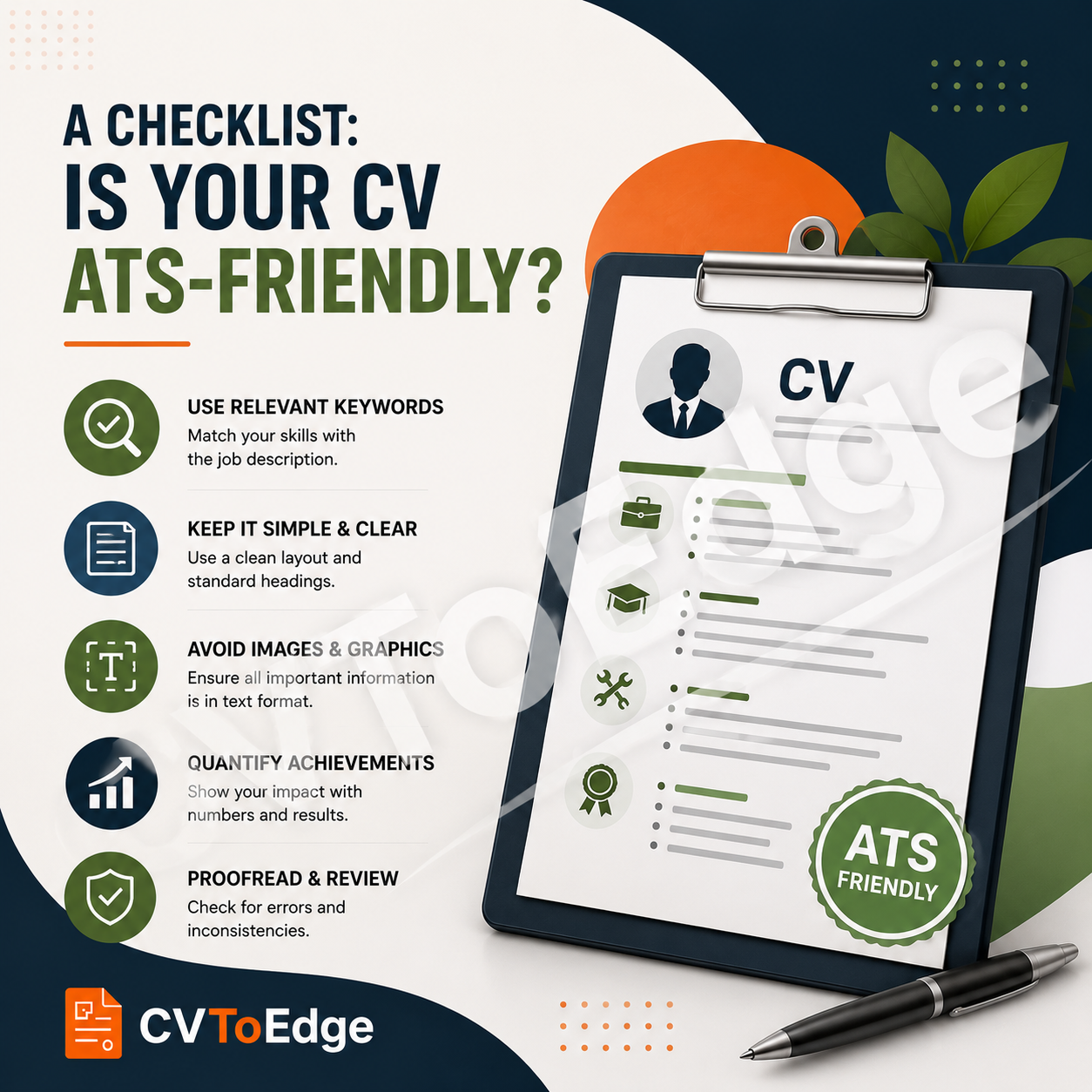
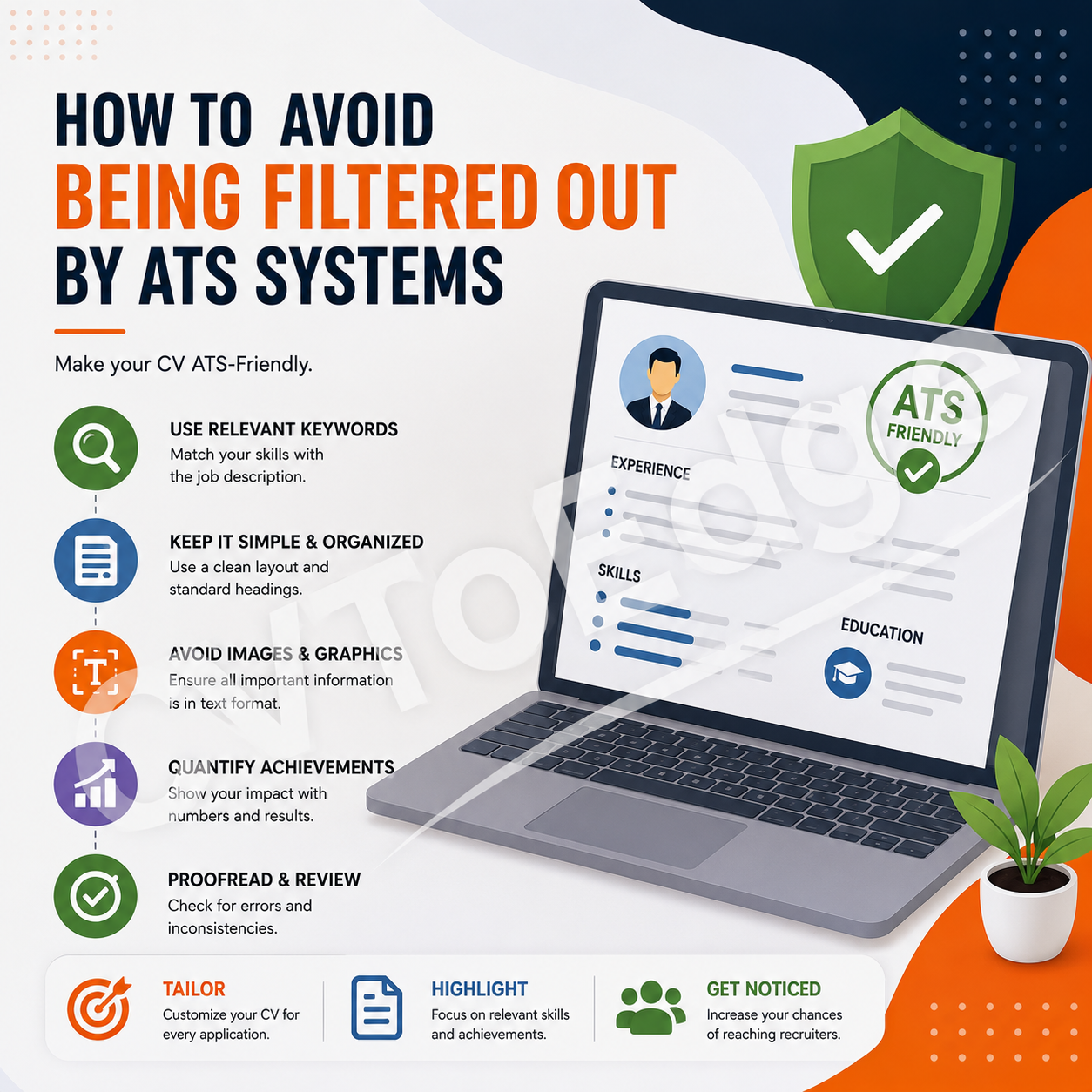
The ATS Perspective
Applicant Tracking Systems (ATS) do not care whether your CV is one page or two pages.
ATS software evaluates:
Keywords
Skills
Experience
Job titles
Education
Relevance
A two-page CV does not receive a lower ATS score simply because it contains more content.
In fact, a properly written two-page CV may perform better because it contains more relevant keywords and achievements.
The key is ensuring every section remains relevant and well-structured.
One Page vs. Two Pages: Real Examples
Example 1: Recent Graduate
Experience:
Internship
University projects
Volunteer experience
Recommended Length:
One Page
Reason:
There is insufficient relevant experience to justify two pages.
Example 2: Software Developer
Experience:
Seven years in software development
Multiple projects
Several certifications
Recommended Length:
Two Pages
Reason:
Important achievements and technical expertise would be lost if compressed into one page.
Example 3: Marketing Manager
Experience:
Eight years in digital marketing
Team leadership experience
Campaign management
Revenue growth achievements
Recommended Length:
Two Pages
Reason:
Strategic achievements require additional space.
Example 4: Customer Service Representative
Experience:
Two years of experience
Limited career history
Recommended Length:
One Page
Reason:
A second page would likely contain filler content.
The Better Question to Ask
Instead of asking:
"Should my CV be one page or two pages?"
Ask:
"Have I included everything a recruiter needs to see without wasting their time?"
That question leads to much better decisions.
Practical Guidelines
Use one page if:
You have less than three years of experience.
You are a student or recent graduate.
Your relevant experience is limited.
You can effectively communicate your value within one page.
Use two pages if:
You have five or more years of experience.
You have significant achievements to showcase.
You manage teams or projects.
You work in technical or specialized fields.
Cutting content would weaken your application.
Final Verdict
For most professionals, the perfect CV length is not determined by a rigid rule.
A strong one-page CV is better than a weak two-page CV.
A strong two-page CV is better than a crowded one-page CV.
Focus on relevance, achievements, clarity, and readability.
If every line on your CV helps convince a recruiter to interview you, then you've found the right length.
And if you're unsure whether your CV is too short, too long, or missing critical information, CVToEdge can analyze your CV, identify areas for improvement, and help you create a recruiter-friendly, ATS-optimized CV that strikes the perfect balance between brevity and impact. Register & Subscribe today.